
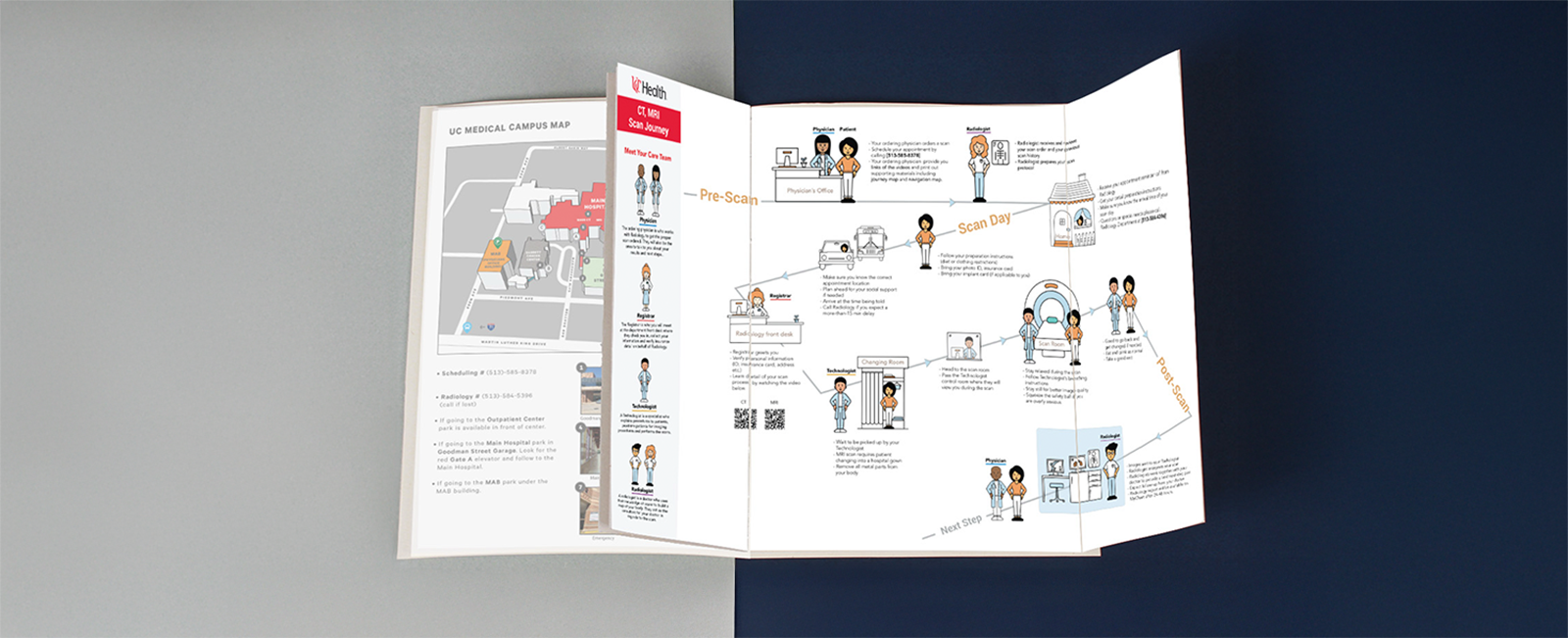
Mockup of a trifold brochure laying open on a split grey and blue background showing in infographic of the CT and MRI scan journey for a patient, including pre-scan, scan day, and post-scan stepsMockup of a trifold brochure laying open on a split grey and blue background showing in infographic of the CT and MRI scan journey for a patient, including pre-scan, scan day, and post-scan steps
|
Radiology Patient Experience

Providing clear communicaiton for patients that are undergoing a CT or MRI scan.

Outpatient imaging can be stressful, confusing, and emotionally taxing for patients. This multi-semester collaboration with UC Health Radiology and GE Healthcare focused on understanding the CT and MRI patient experience and designing educational tools and services that provide clarity, reduce anxiety, and support more connected care.

The challenge

Reducing uncertainty in high-stress healthcare moments. Patients arriving for imaging often:Feel unprepared for what will happen during a scanLack clear, unbiased informationExperience anxiety that impacts satisfaction and compliance

The insight

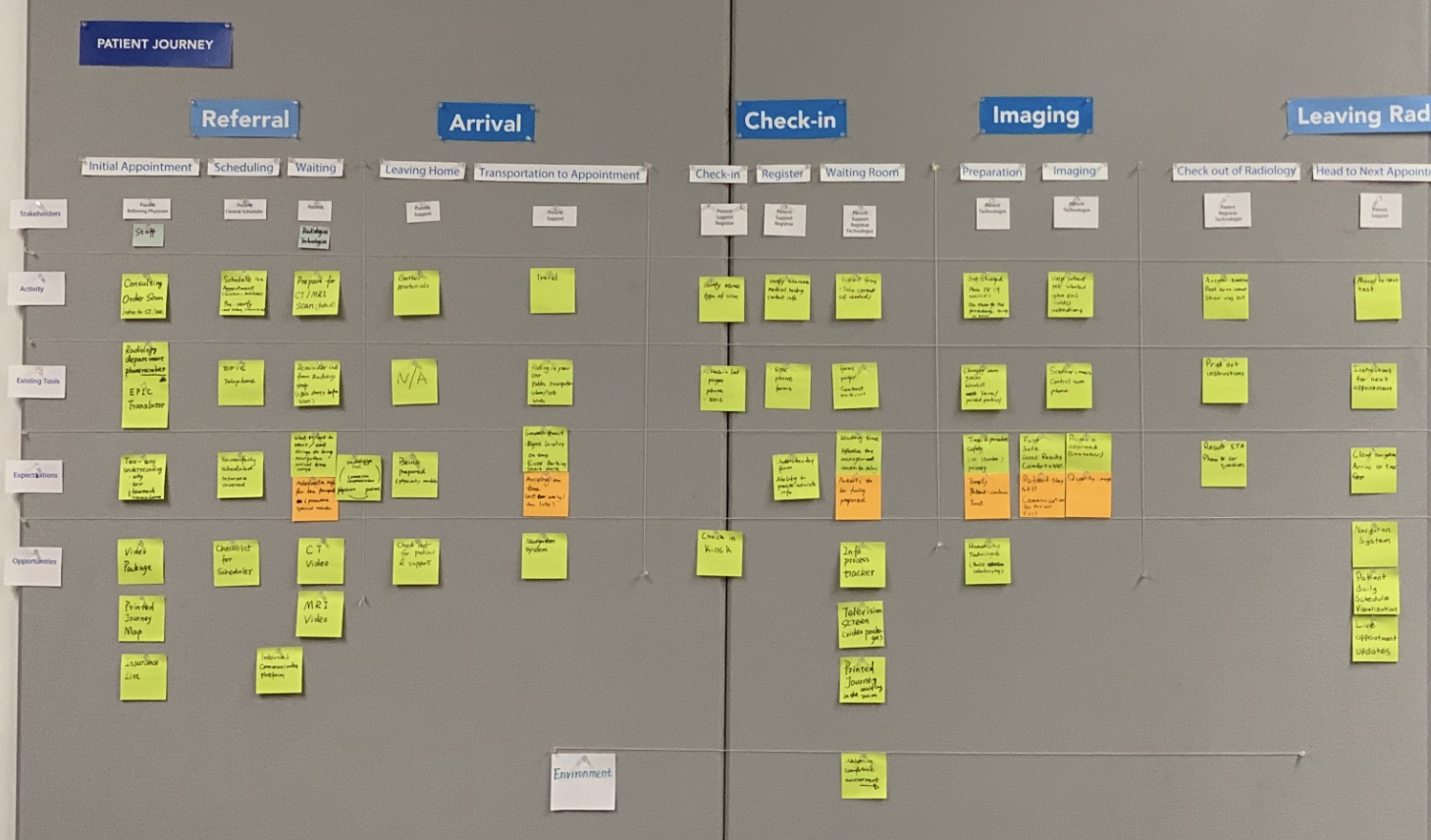
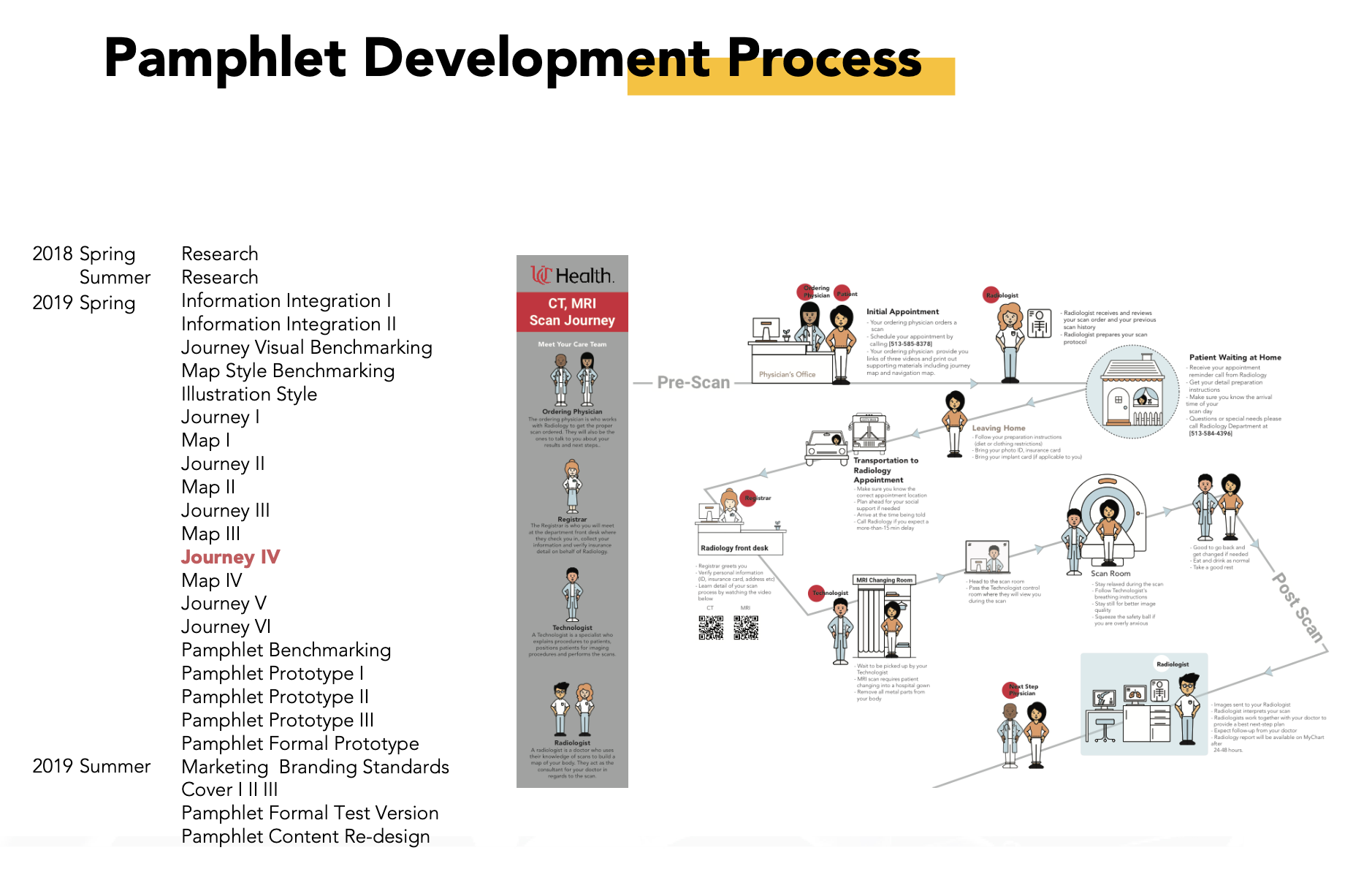
Patient journey maps were created for both MRI and CT experiences that explain all touch points and decisions during the process. Starting from scheduling your appointment to where the scan will happen to when to expect results was clearly defined to provide clarity for a complicated process.

The deliverable

At the same time, clinicians and staff lacked shared tools to consistently educate and guide patients. The opportunity was to improve patient understanding while supporting staff with aligned, reusable resources.

Expertise.

  • Interviewing
  • Journey mapping
  • Stakeholder interviews
  • Shadowing and observation
  • Service and systems design
  • Education content design
  • Video and print prototyping
  • Survey design
  • Implementation planning

“When patients know what to expect, the entire experience changes.”

Radiology Stakeholder

problem

Aligning patient needs, clinical workflows, and system constraints.

The imaging experience spans many touch points: scheduling, arrival, preparation, scanning, and follow-up, involving physicians, technologists, administrators, and patients. The challenge was to design solutions that:Support patients emotionally and cognitivelyFit into existing workflowsScale across departmentsMeet clinical accuracy and operational standards

Approach

Mapping the real imaging journey.

The team conducted primary and secondary research, including:

  • Interviews with physicians, technologists, and administrators
  • Observations and shadowing
  • In-depth patient experience mapping
  • Literature review on imaging modalities and patient education
  • Insights were synthesized into personas and detailed journey maps, revealing key breakdowns and moments of opportunity across the patient experience.
APPROAch

Design education as experience.

The team prioritized Educational Tools as the most immediate, high-impact opportunity. Next, research continued to identify possible mediums and topics to include. A comprehensive pamphlet following the patient journey and video were developed based on feedback from patients, staff, and clinical stakeholders.

OUTCOME

Prepared patients are calmer patients.

The final educational materials included a journey guide pamphlet and introduction video. These materials were tested and refined through co-creation sessions and a formal survey of 52 patients and 37 care team members. These resources helped patients better understand what to expect, reducing anxiety and improving overall experience. Staff benefitted from consistent, reusable resources that aligned communication across the care team.